
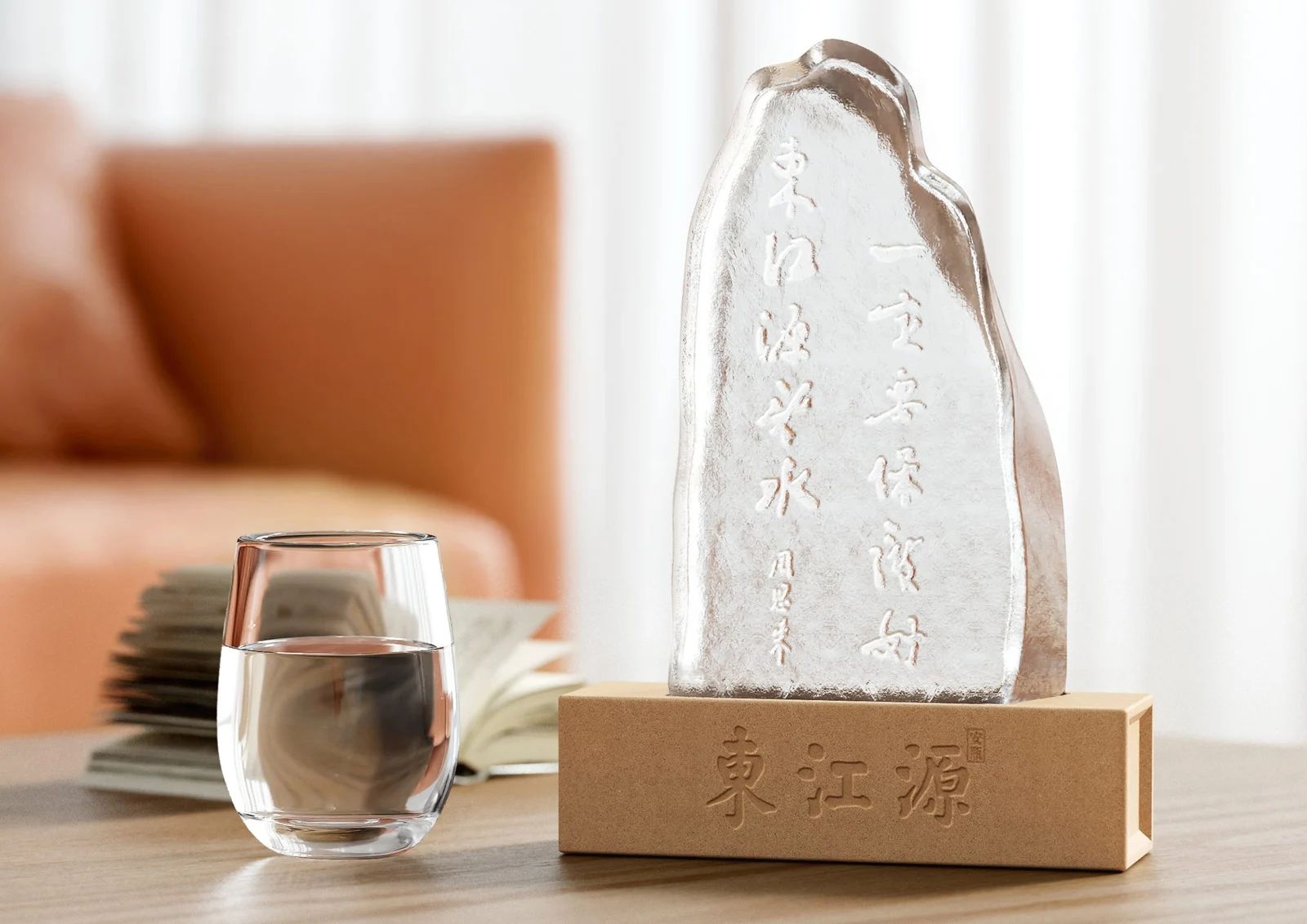
Someone in China made a bottle of water that looks like it needs its own shelf in an art gallery.
And I have questions.
Mainly, how did we get from a regular bottle of water to something that looks like it belongs in a museum?
Meet Dongjiangyuan's Shanshui Xinwu.
It's drinking water packaged in a beautiful, sculptural glass bottle inspired by China's Sanbaishan mountains.
And once you've finished drinking the water, you're supposed to keep the bottle as a decorative piece.
Yes, WATER.
But the business thinking behind this is even more interesting than the bottle itself.
Nobody Buys Water Expecting to Inherit a Sculpture
Let's be serious.
Most of us buy bottled water, drink it, and toss the bottle into the recycling bin.
End of relationship.
We've barely finished swallowing before the packaging is on its way out of our lives.
But somebody at Dongjiangyuan apparently looked at that entire arrangement and thought, "Why does the relationship have to end when the water runs out?"
Now THAT is an interesting question.
Because what they've created is more than a container.
It's a product that gets to have a second life.
And that changes the way customers might think about purchasing it in the first place.
The Bottle Has a Retirement Plan
Look at the design.
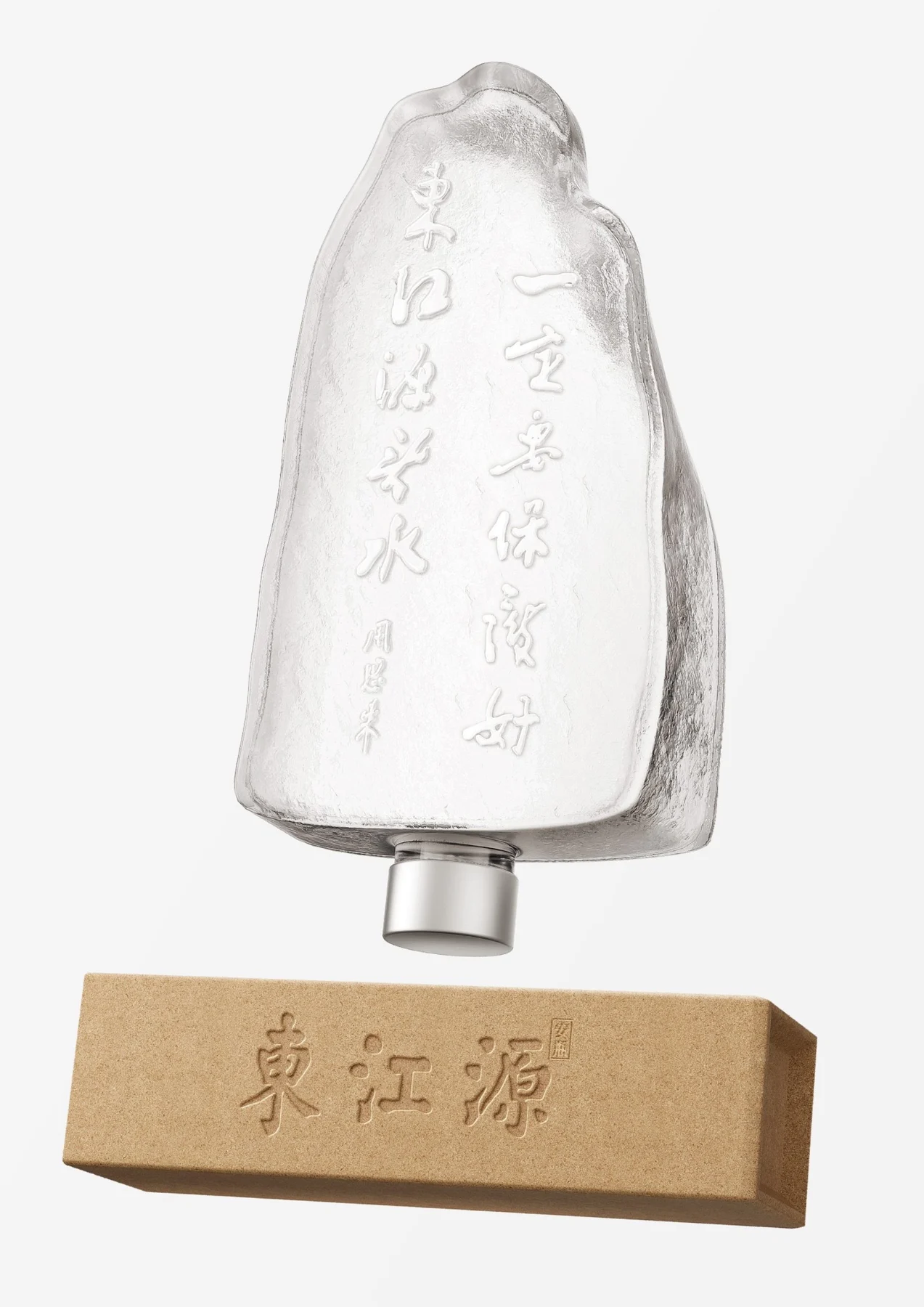
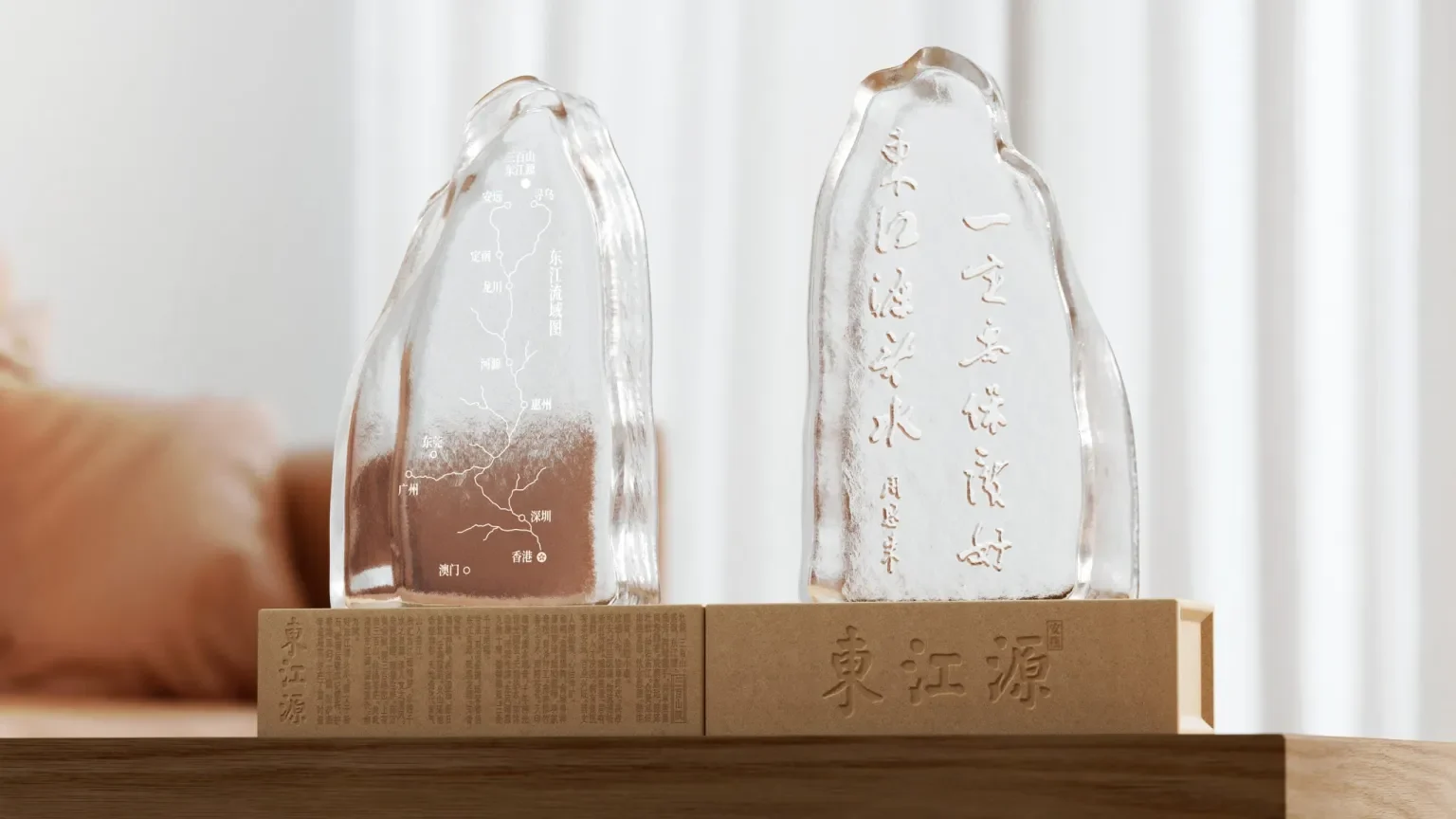
The glass resembles a carved stone tablet, inspired by the mountains surrounding the water's source.
There are delicate details etched into the surface, and it sits on a display base made from recycled grain husks.
The design was developed by Lingyun Creative with the intention that people could continue displaying the bottle after drinking the water.
Think about that for a minute.
Most packaging is designed to survive until the customer opens it.
This packaging was designed to survive long after the product is gone.
And unlike the twenty-seven shopping bags sitting in somebody's kitchen cabinet because they're "too nice to throw away," this one actually has a purpose after its original job is finished.
Drink the water.
Keep the art.
That's a pretty clever arrangement.
The Packaging Becomes Part of Your Home
Here's where the business strategy gets particularly interesting.
Most beverage brands spend enormous amounts of money trying to stay in front of customers.
Advertising.
Retail displays.
Social media campaigns.
Influencer partnerships.
All because they want people to keep seeing and remembering their products.
Dongjiangyuan designed packaging that customers might voluntarily put on their bookshelves.
Or a coffee table.
Or a desk.
Imagine that.
Instead of paying to appear in front of someone again, you've created an object they might actually want to keep in front of them.
Of course, not everyone will display an empty water bottle.
But the design gives people a reason to consider doing exactly that.
And that's a completely different approach to brand visibility.
They Made the Packaging Worth Wanting
Here's something I think more founders should pay attention to.
Sometimes customers aren't just buying what's inside the package.
They're buying the entire object.
Think about beautiful perfume bottles.
Limited-edition coffee tins.
Luxury candle jars.
Or those Apple boxes people keep in their closets for years, apparently preparing for the day the Smithsonian comes knocking.
We laugh, but there's something important happening.
When the packaging itself feels valuable, throwing it away becomes a harder decision.
Dongjiangyuan took that thinking a step further.
The bottle isn't simply too pretty to throw away.
It was intentionally designed to become a decorative object.
That gives the customer two reasons to be interested.
The water they can drink today.
And the object they can enjoy afterward.
Here's Where I'd Pay Attention If I Were a Founder
You don't need to start selling everything inside a glass sculpture.
Please don't.
I don't need my laundry detergent arriving on a marble pedestal.
But there are some very smart lessons here.
1. Think about what happens after the customer finishes using your product.
Most companies spend all their time thinking about getting customers to buy.
What happens afterward?
Does the experience end completely?
Or could something valuable remain?
A thoughtful keepsake, reusable packaging, a useful resource, or even a beautiful presentation can extend the experience beyond the original purchase.
2. Give people more than one reason to want what you're selling.
People might buy a candle because they love the fragrance.
But if the container is beautiful enough to use afterward, you've just given them another reason to choose it.
The same thinking can apply to gifts, subscription boxes, premium products, and even services.
What additional value could customers enjoy after the main transaction is over?
3. Stop treating packaging like it's just something that holds the product.
Packaging can communicate quality.
Tell a story.
Create emotional attachment.
And sometimes become a product in its own right.
If you're spending money on packaging anyway, it's worth asking whether it could do something more interesting than protect the contents.
Now, About Your Business...
Here's what I'd love you to consider.
What happens to your brand after your customer has finished using what they bought?
Does the relationship end?
Does the packaging disappear?
Does the experience become a distant memory?
Or have you created something they might want to keep around?
Because there's a difference between selling something people consume and creating something people want to hold onto.
And that difference can change how they perceive the value of what you're selling.
Dongjiangyuan took an ordinary bottle of water and gave customers a reason to appreciate it long after the last sip.
I think that's a very smart design decision.
And now I have one question.
Would you buy this because you wanted the water, or because you wanted the bottle?
Because I have a feeling quite a few people would be shopping for the second one.