
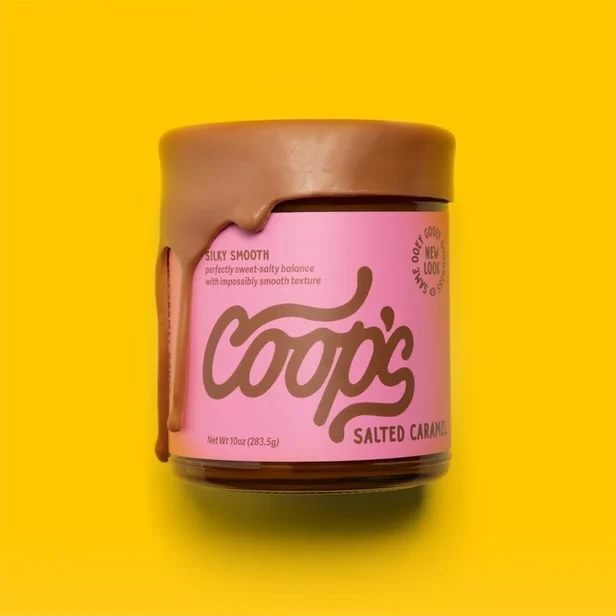
Putting caramel in a jar is sensible.
Making the jar look like somebody already dipped it in caramel is just unfair.
Because now I'm standing here looking at a product I haven't tasted, wondering whether buying ice cream counts as supporting the creative industry.
Meet Coop's.
A company making hot fudge and caramel sauces with packaging that looks good enough to eat.
And whoever came up with those dripping lids understood something very important about selling food.
People start tasting with their eyes long before they reach for their wallets.
That Lid Has Absolutely No Business Looking That Delicious
Look at this thing.
The caramel-colored lid looks like somebody poured warm caramel over the jar and just let it drip down the sides.
Even the lettering looks poured.
And the whole design makes you think about the one thing you're supposed to do with the product.
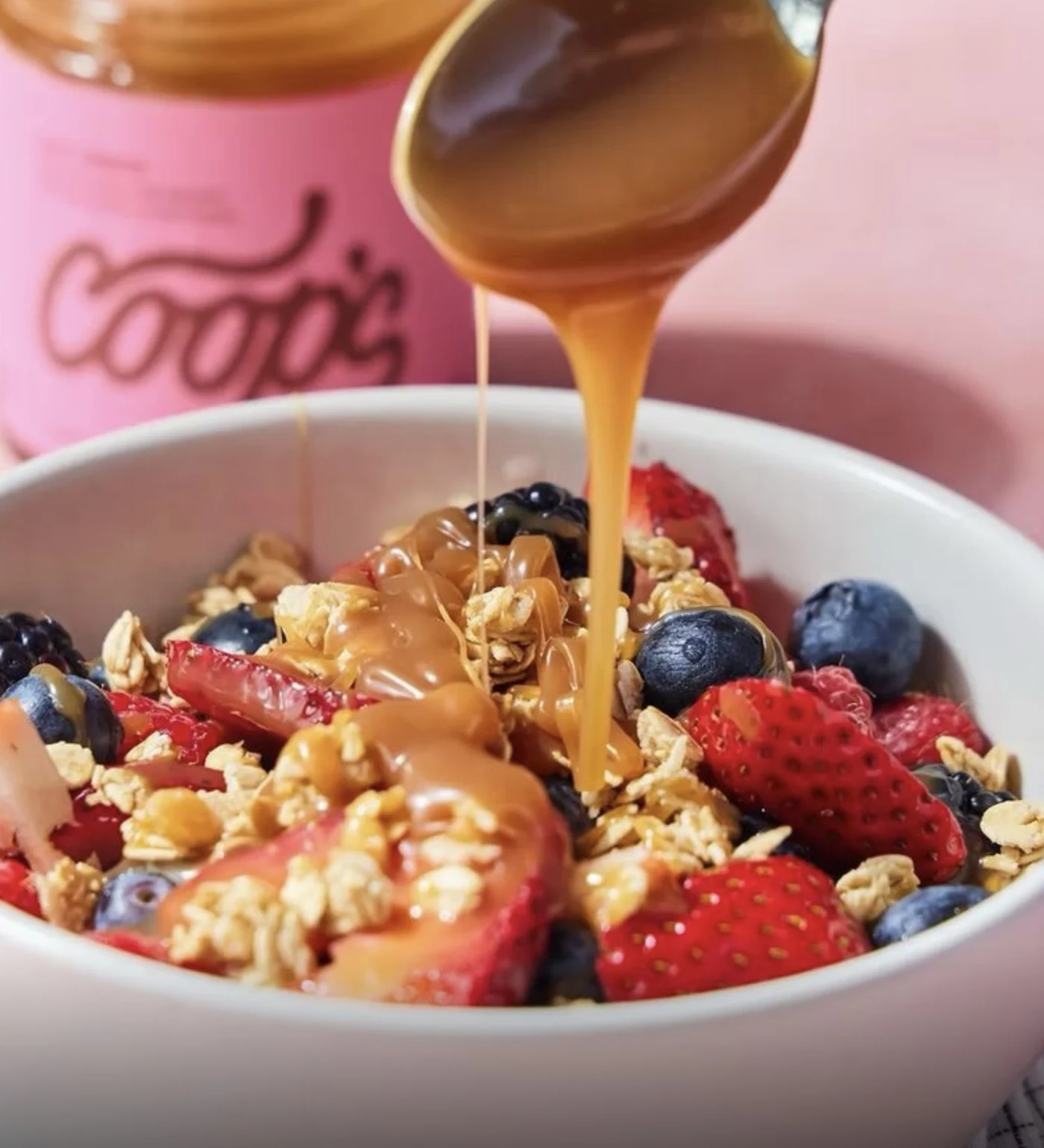
Pour it.
Over ice cream. Brownies. Pancakes. Whatever happens to be nearby when your self-control goes on vacation.
Now here's the clever part.
You haven't opened anything.
You haven't smelled the caramel.
You certainly haven't tasted it.
But your brain is already making plans.
That's a pretty impressive amount of work for a jar lid.

The Packaging Is Giving You a Free Sample Without the Sample
Think about how food is usually sold.
Companies spend money on mouthwatering photography, commercials, demonstrations, and elaborate displays to help customers imagine how delicious something might be.
Coop's has managed to build some of that experience right into the packaging.
The lid resembles the finished product in action.
It's practically a product demonstration sitting on a grocery store shelf.
And that's what makes this design particularly smart.
The customer doesn't have to work very hard to imagine what the caramel will look like when they pour it.
The packaging has already planted that picture in their head.
Now they're imagining the ice cream.
And the spoon.
And possibly whether anyone would notice if they skipped the ice cream altogether.
Which, frankly, is between them and their refrigerator.
The Jar Is Doing the Selling Before Anyone Says a Word
Here's something I think business owners sometimes overlook.
Your packaging is often your first sales pitch.
Not your website.
Not your beautifully written product description.
Not that expensive advertising campaign everybody spent six weeks approving.
The package.
Because when somebody walks past your product on a shelf, you might only have a moment to get their attention.
And if every other product is sitting there looking like a regular jar of sauce, the one with caramel dripping down the lid has a pretty good reason to get noticed.
It's recognizable.
It's memorable.
And it tells you something about the product before you've read a single ingredient.
That last part is important.
Good packaging doesn't just look attractive. It helps customers understand what they're buying and why they might want it.
And Coop's Didn't Stop at Caramel
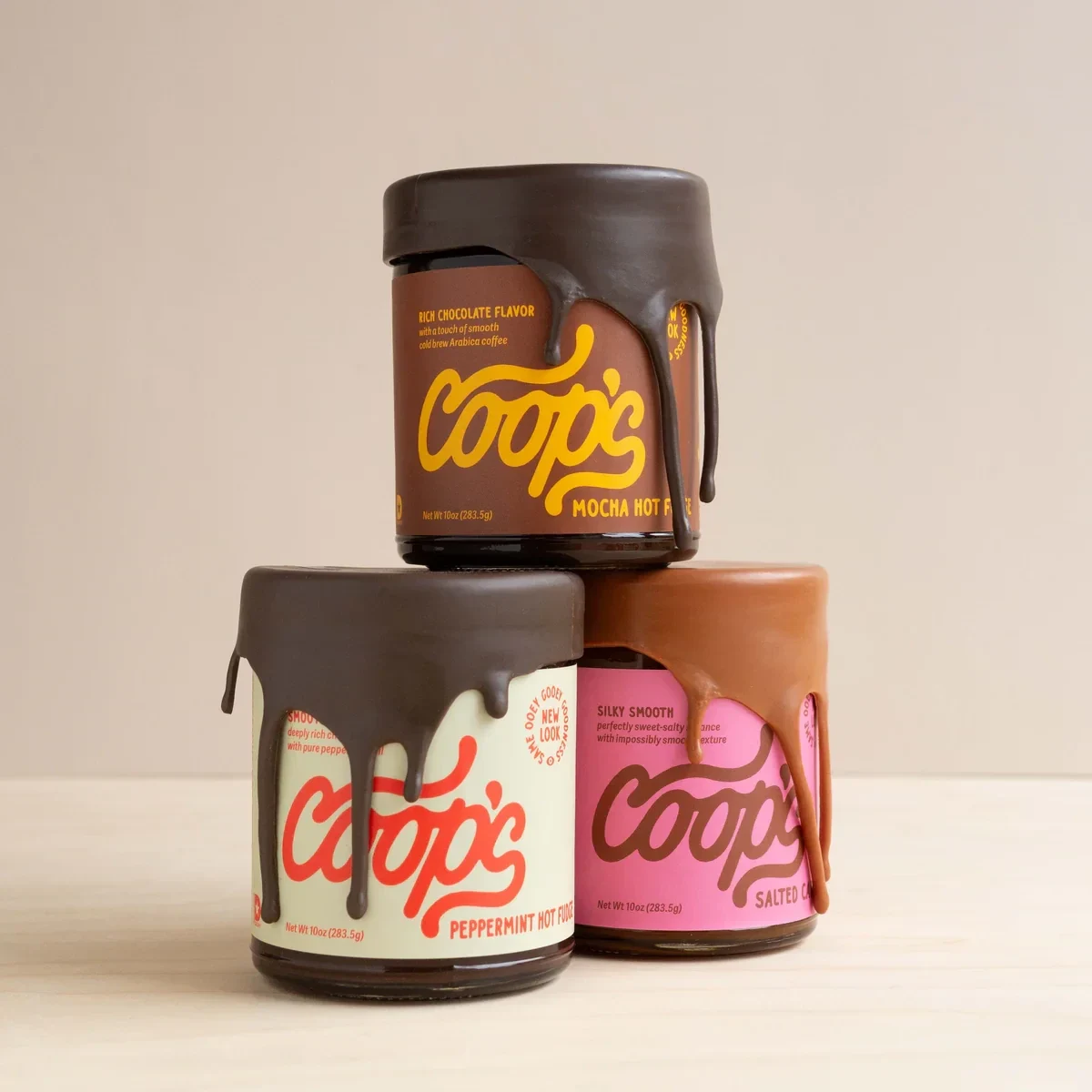
The dripping-lid concept also appears across the brand's hot fudge products.
Which means that distinctive detail becomes something customers can recognize across different jars.
That's where a clever packaging decision starts becoming a brand asset.
A customer might forget the exact name of a sauce they saw last week.
But the jar with the dripping lid?
That's easier to remember.
And when they see another product from the same family, the visual connection is already there.
You don't have to introduce yourself from scratch every single time.
Incidentally, Coop's founder Marc Cooper has described the dripping lid as a trademarked design, and the packaging has received industry recognition.
So this isn't simply a cute decoration somebody thought would look nice.
It's a recognizable part of the brand's identity.
Here's Where I'd Pay Attention If I Were a Founder
You don't need to start making every package look like something is melting off it.
Please don't.
I don't need to buy a bottle of shampoo that looks like it leaked all over the shelf.
But there's some very smart thinking here that applies well beyond food.
1. Show customers the experience, not just the product.
If you sell something, ask yourself whether people can easily picture what it's like to use it.
A furniture company can help customers imagine a beautiful room.
A consultant can help clients picture what life looks like after a problem is solved.
A skincare company can make the application experience part of its presentation.
Don't make people do all the imagining themselves.
Give them something to work with.
2. Make your packaging communicate before anyone reads it.
If I covered your product's name and removed the description, would the packaging still tell me something useful?
Would I recognize the category?
Understand the experience?
Feel curious enough to pick it up?
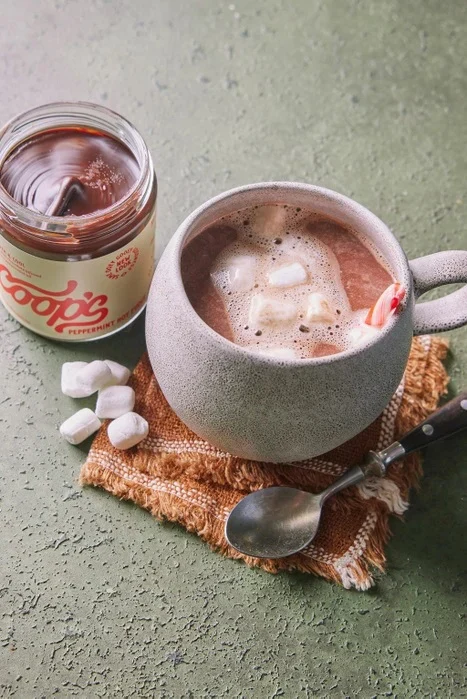
Coop's dripping lid tells a little story before you've even read the label.
That's worth studying.
3. Find one detail people can remember you by.
Not fifteen.
One really good one.
Something recognizable enough that customers could describe it to a friend.
"You know, that caramel with the dripping lid."
That's the kind of description I'd love customers to be giving about a product I created.
Because when people can describe what makes you different, you've made it easier for them to remember you and recommend you.
4. Stop making customers work so hard to see your value.
Sometimes businesses become so familiar with their products that they forget customers are seeing them for the first time.
They bury the interesting part in a long description.
Or assume everybody will immediately understand what makes the product special.
But people are busy.
They've got groceries to buy, meetings to attend, and fourteen other things competing for their attention.
The easier you make it to understand your value, the better.
Now, About Your Business...
Here's something I'd love you to think about.
Can people picture the value of what you're selling?
Not just understand it after you've explained everything.
Actually picture it.
Can they imagine owning it, opening it, using it, enjoying it, or benefiting from it?
Because there's a big difference between telling someone your product is wonderful and helping them imagine how wonderful it would be to have it.
Coop's has managed to make a closed jar look delicious.
And that's quite an accomplishment.
I haven't tasted anything, but I've already mentally assembled a sundae, selected my toppings, and made some questionable after-dinner decisions.
All because somebody thought the lid should look like dripping caramel.
Now that's packaging doing its job.
So here's my question: What's one product you've bought simply because the packaging was too good to resist?
I want names.